Why Generational Diversity Matters in the Human Side of Technology
Technology may drive innovation, but it is people who create, implement and improve it.
Today’s organisations are more diverse than ever, with professionals from multiple generations working together toward shared goals. Each generation brings different experiences, perspectives, communication styles andapproaches to problem solving.
When organisations embrace generational diversity, they unlock opportunities for stronger workplace collaboration, improved decision making and sustainable growth.
A Multi-Generational Workforce Creates New Opportunities
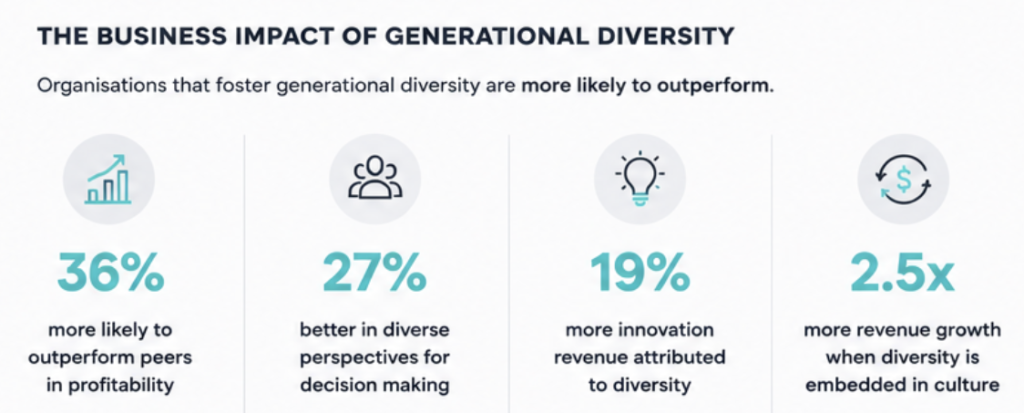
For the first time in history, organisations may have up to five generations working side by side.
Each generation contributes unique strengths:
- Experienced professionals bring institutional knowledge and strategic insight.
- Mid career employees often bridge experience with adaptability.
- Younger professionals contribute fresh perspectives and digital fluency.
- Emerging talent challenges traditional thinking and introduces new ways of working.
Rather than viewing these differences as obstacles, successful organisations recognise them as valuable assets.
Different Perspectives Drive Better Outcomes
Teams that combine varied experiences are often better equipped to solve complex challenges. Diverse viewpoints encourage creativity, reduce blind spots and support more balanced decision making.
This diversity of thought becomes particularly valuable in fast changing industries where innovation depends on understanding both established practices and emerging trends.
The Connection Between Generational Diversity and Workplace Collaboration
Strong workplace collaboration does not happen automatically. It requires organisations to create environments where different generations feel valued and heard.
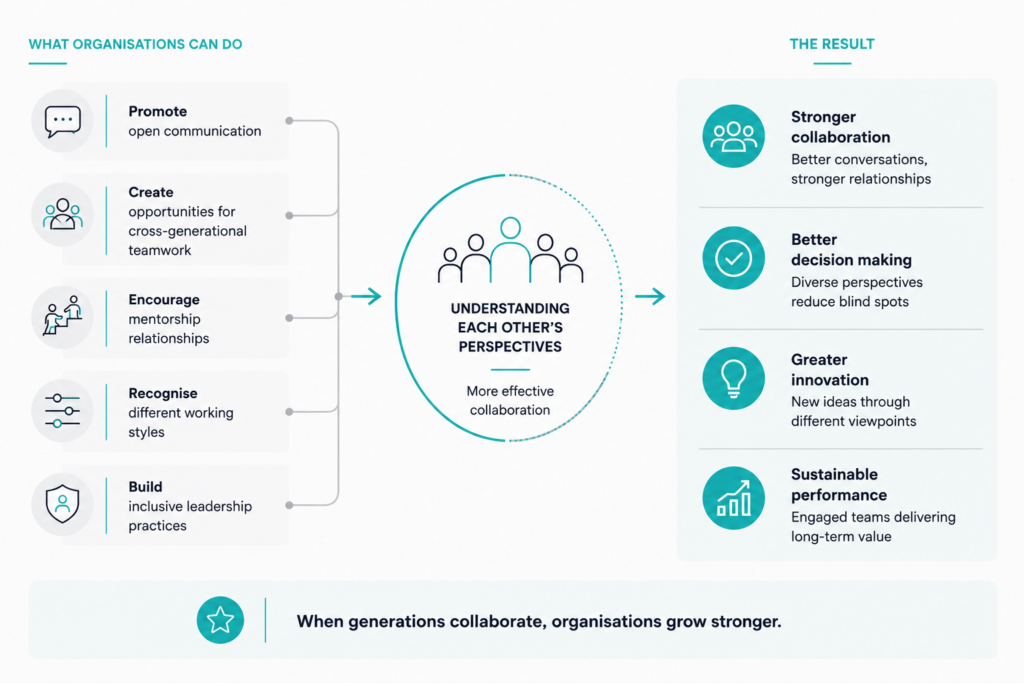
When employees understand each other’s perspectives, collaboration becomes more effective.
Organisations can encourage this by:
- Promoting open communication
- Creating opportunities for cross generational teamwork
- Encouraging mentorship relationships
- Recognising different working styles
- Building inclusive leadership practices
The result is a workplace where employees learn from one another rather than operate in separate generational groups.
Collaboration Builds Stronger Teams
The most successful teams are not those where everyone thinks alike. They are teams where people with different experiences work together toward a common objective.
Generational diversity strengthens collaboration by combining experience, innovation, stability and adaptability within the same environment.
Knowledge Transfer Is Essential for Long Term Success
One of the greatest benefits of generational diversity is its impact on knowledge transfer.
Every organisation depends on knowledge. Some knowledge is documented, but much of it exists in experience, relationships and practical understanding built over time.
Without effective knowledge sharing, organisations risk losing valuable expertise when employees move on or retire.
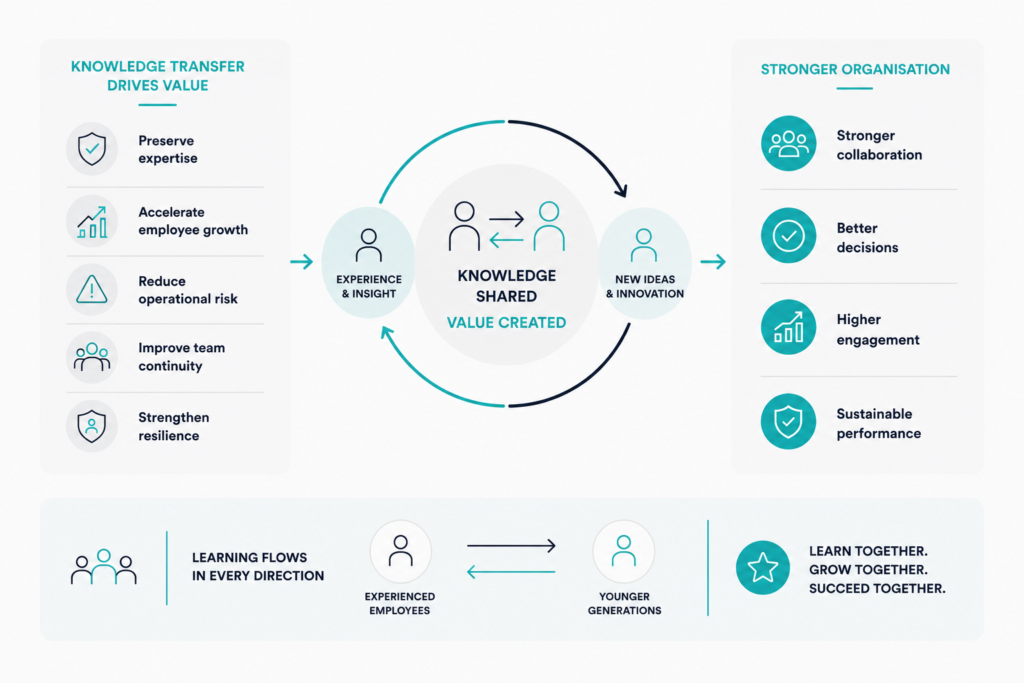
A strong knowledge transfer strategy helps organisations:
- Preserve critical expertise
- Accelerate employee development
- Reduce operational risk
- Improve continuity across teams
- Strengthen organisational resilience
Knowledge transfer is not a one way process. While experienced employees share valuable insights, younger generations often introduce new technologies, tools and ways of thinking that benefit the entire organisation.
Learning Must Flow in Every Direction
The most effective organisations create a culture of continuous learning where knowledge moves across all levels of experience.
This mutual exchange strengthens relationships, improves engagement and supports long term business performance.
Company Culture Connects People and Technology
Technology alone cannot create engagement, trust, or belonging. These elements come from a strong company culture.
As organisations continue to adopt new technologies, maintaining a human centred culture becomes increasingly important.
A positive company culture encourages:
- Respect for different perspectives
- Continuous learning
- Open communication
- Employee engagement
- Shared accountability
When employees feel connected to the organisation and to each other, they are more likely to collaborate effectively and contribute to innovation.
People Remain the Foundation of Innovation
Every technological advancement ultimately depends on people. Innovation succeeds when organisations create environments where employees can share ideas, learn from one another and work together toward common goals.
People centred innovation is not separate from technological progress. It is what makes innovation possible.
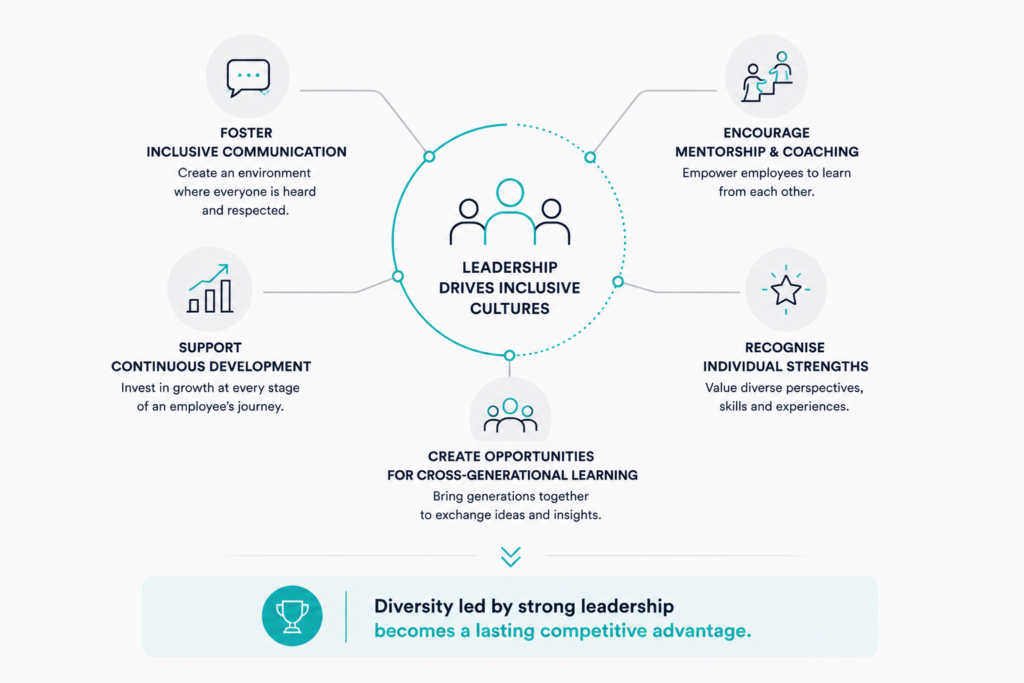
Leadership Plays a Critical Role in Generational Diversity
Leaders have a significant influence on how generational diversity is experienced within an organisation.
Effective leadership focuses on creating opportunities for collaboration, encouraging knowledge sharing and ensuring every employee feels valued regardless of age or experience.
Successful leaders:
- Foster inclusive communication
- Encourage mentorship and coaching
- Support continuous development
- Recognise individual strengths
- Create opportunities for cross generational learning
By doing so, they transform diversity into a strategic advantage.
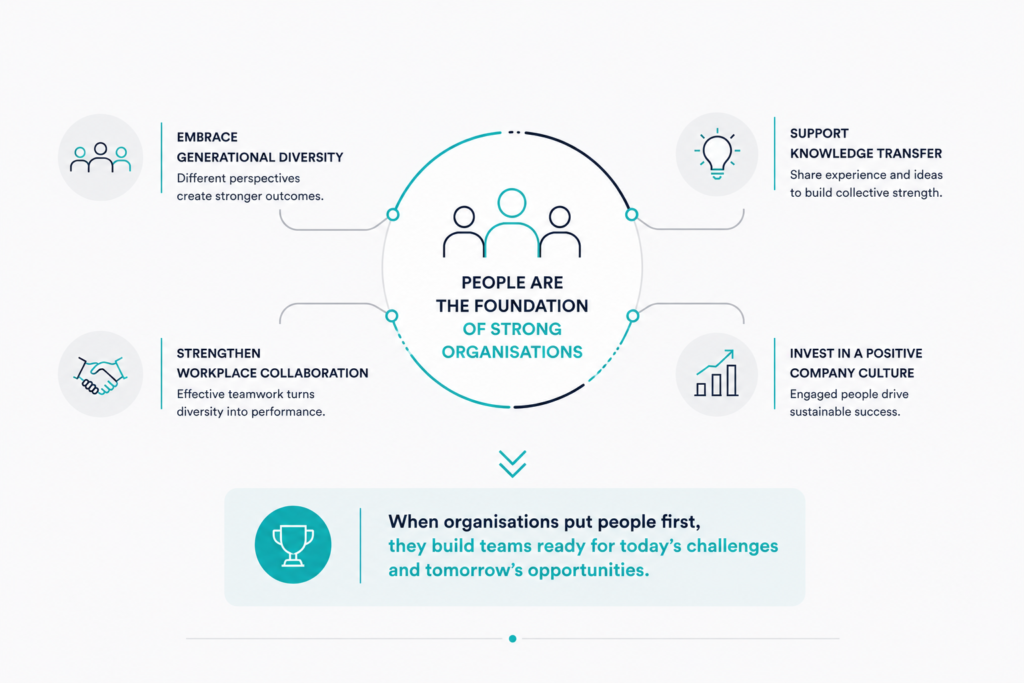
Why People Are the Foundation of Strong Organisations
As technology continues to evolve, organisations must remember that their greatest asset remains their people.
The companies that thrive will be those that successfully combine innovation with human connection.
By embracing generational diversity, supporting knowledge transfer, strengthening workplace collaboration and investing in a positive company culture, organisations can build teams that are prepared for both today’s challenges and tomorrow’s opportunities.
Conclusion: Technology Advances Through People
The future of work will undoubtedly be shaped by technology, but its success will always depend on people.
True innovation reminds us that progress is not only about systems, platforms, or artificial intelligence. It is about the individuals who collaborate, learn, share knowledge, and drive meaningful change every day.
Organisations that value generational diversity and invest in their people will be better positioned to innovate, adapt and succeed in an increasingly digital world.
Explore how Nearshore Portugal can help you build collaborative, high-performing teams, strengthen knowledge transfer and scale delivery with expert nearshore talent aligned with your business goals.
World Economic Forum. (2025).
https://www.weforum.org/stories/2025/01/workforce-change-future-ready-businesses/
Harvard Business Review. (2024).
https://hbr.org/tip/2024/04/create-a-healthy-multigenerational-workplace
Deloitte. (2024).
https://www2.deloitte.com/global/en/insights/focus/human-capital-trends.html
Gallup. (2024).
https://www.gallup.com/workplace/
Society for Human Resource Management (SHRM). (2024).
https://www.shrm.org/topics-tools/topics/generational-differences-workplace
Organisation for Economic Co-operation and Development (OECD). (2024).
https://www.oecd.org/employment/future-of-work/
Journal of Knowledge Management. (Current Journal).
https://www.emerald.com/insight/publication/issn/1367-3270
Academy of Management Journal. (Current Journal).
https://journals.aom.org/journal/amj
The International Journal of Human Resource Management. (Current Journal).
https://www.tandfonline.com/journals/rijh20