
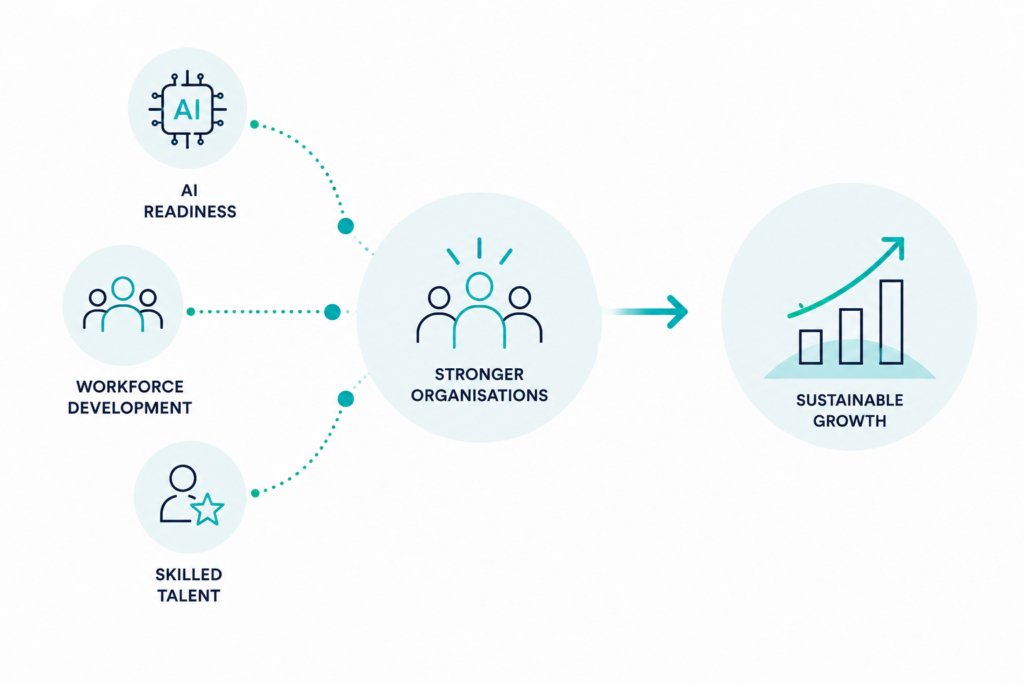
European businesses are entering a new phase of digital transformation. While artificial intelligence continues to dominate technology discussions, success is no longer determined by technology alone. Companies must also focus on AI Readiness, workforce development and access to skilled talent to remain competitive.
Across Europe, organizations are moving beyond experimentation and building the foundations needed for long term growth. From developing clear AI strategies and upskilling employees to addressing growing talent shortages, businesses are rethinking how they prepare for the future.
These trends are reshaping the European technology landscape and creating new opportunities for organizations that can adapt quickly and effectively.
AI Readiness: Moving from experimentation to strategy
AI Readiness is becoming one of the most important priorities for businesses across Europe. After an initial wave of experimentation, companies are moving beyond AI pilots and focusing on long-term implementation.
The conversation is no longer centred on which AI tools to purchase. Instead, leaders are asking how AI can be integrated into business operations, supported by clear governance and aligned with strategic objectives.
Successful AI adoption requires more than technology. It depends on:
- Clear business goals
- Strong AI Governance
- Workforce training and upskilling
- Defined processes and accountability
As AI becomes more embedded in everyday operations, organisations are realizing that strategy must come before software.
Why It Matters
Companies that invest in AI Readiness are better positioned to scale innovation and achieve measurable results. Aligning AI initiatives with business strategy helps reduce risk, improve efficiency and create sustainable competitive advantages.
Organisations that focus only on tools may struggle to achieve meaningful outcomes, while those that invest in people, processes and governance are building stronger foundations for long term growth.
Workforce Development: Becoming a competitive advantage
Technology is evolving faster than ever, but many businesses are discovering that successful transformation depends on people as much as it does on technology.
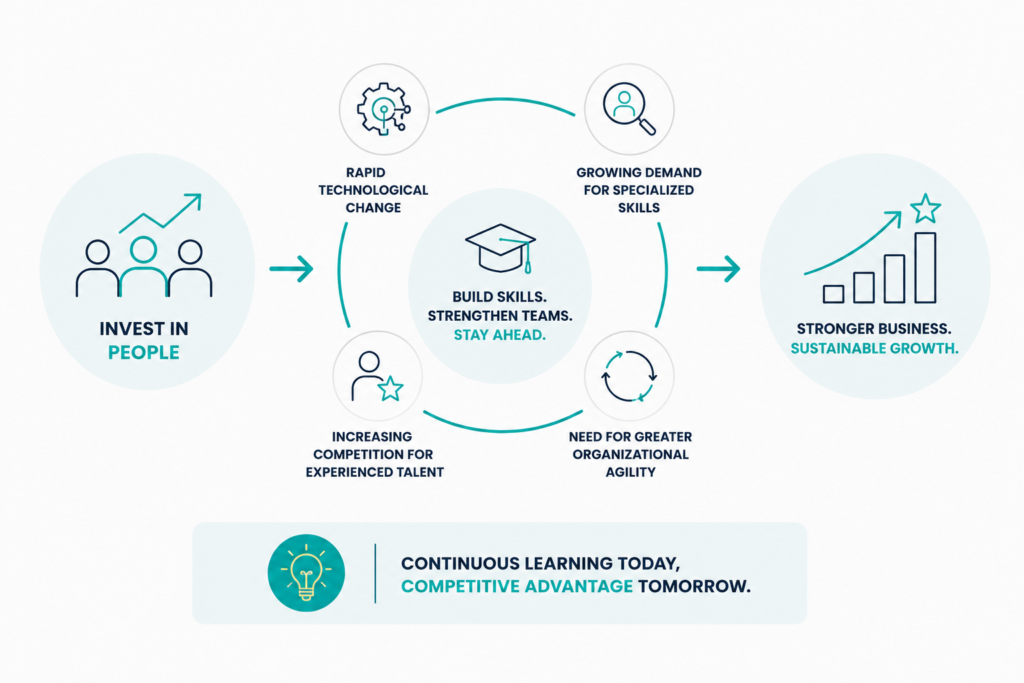
Across Europe, companies are increasing investment in workforce development, technical training and leadership upskilling to prepare for changing market demands. Rather than relying solely on external hiring, organizations are focusing on strengthening existing teams and building internal capabilities.
This change is being driven by several factors:
- Rapid technological change
- Growing demand for specialized skills
- Increasing competition for experienced talent
- The need for greater organizational agility
Businesses that invest in continuous learning are often better equipped to adapt to new technologies, improve productivity and support long term growth.
Why It Matters
Businesses that invest in workforce development are better prepared to adapt to changing technologies, reduce skills gaps and strengthen long term performance. As competition for experienced professionals continues to grow,developing existing talent is often more sustainable and cost effective than relying solely on recruitment.
Companies that prioritize learning, upskilling and employee development can respond more effectively to market changes while improving retention, productivity and innovation. In an increasingly competitive environment, organizations that invest in their people today will be better positioned to scale, innovate and maintain a strong competitive advantage in the years ahead.
Tech Talent Demand: The skills gap continues
While AI technologies continue to advance, the need for skilled professionals remains a major challenge.
Tech Talent Demand is increasing as companies seek experienced software engineers, AI specialists and technology leaders capable of supporting digital transformation initiatives.
At the same time, many organisations are facing:
- Longer recruitment cycles
- Greater competition for talent
- Growing demand for specialized expertise
- Skills shortages across technical roles
These challenges encourage businesses to explore alternative approaches to workforce growth and talent acquisition.
Why It Matters
As Tech Talent Demand continues to rise, many organisations are turning to Nearshore Development to strengthen delivery capacity and access specialised expertise.
Nearshore teams provide businesses with greater flexibility while helping reduce hiring pressure and accelerate project delivery. This model also supports closer collaboration, faster onboarding and access to highly skilled professionals within aligned time zones.
For companies looking to scale efficiently, Nearshore Development is becoming an increasingly strategic solution.
Final Thoughts
AI Readiness is becoming a defining factor for business success across Europe. As the EU AI Act introduces new expectations around responsible AI and Tech Talent Demand continues to rise, companies are being challenged to rethink how they approach innovation and growth.
The focus is no longer simply on adopting AI. Organisations must also ensure they have the right strategy, governance frameworks and skilled teams to support long-term implementation. Businesses that balance innovation with compliance and workforce development will be better positioned to maximise the value of AI while reducing risk.
At the same time, the growing demand for experienced technology professionals highlights the importance of investing in talent, whether through internal upskilling initiatives, strategic hiring, or Nearshore Development partnerships.
The companies that will lead the next phase of digital transformation are not necessarily those adopting AI the fastest. They are the ones building strong foundations through AI Readiness, responsible governance and access to the right expertise. By taking a strategic approach today, businesses can create sustainable competitive advantages and remain resilient in an increasingly technology-driven market.
Explore how Nearshore Portugal can help you build AI ready teams, strengthen workforce capabilities and scale delivery with expert nearshore talent aligned with European standards.